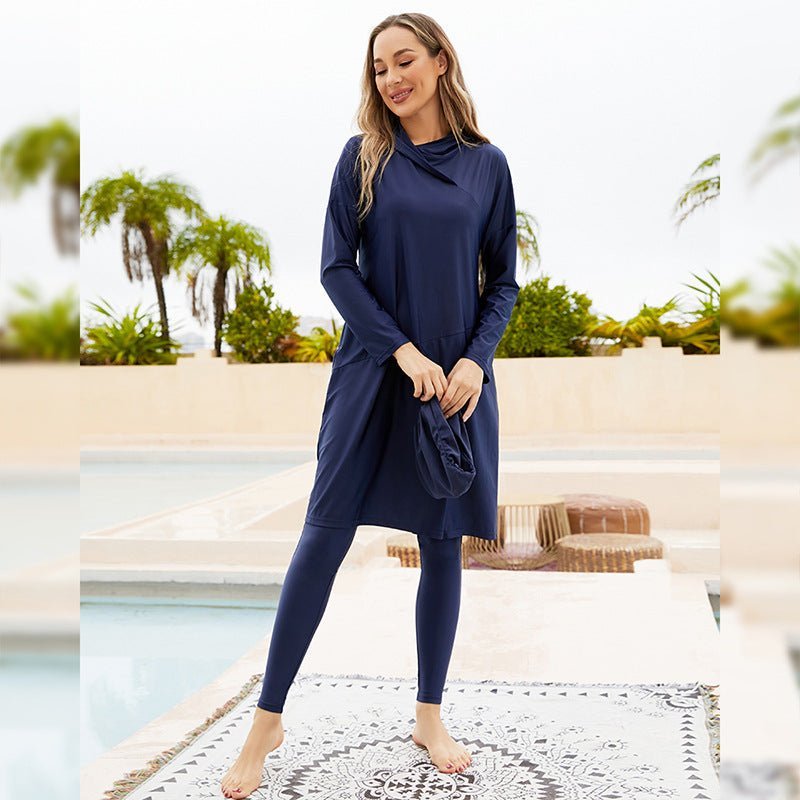

A niqab is a face veil worn by Muslim women as part of modest dress, covering the face entirely except for the eyes, which are visible through a mesh or open panel. It is typically paired with a headcover and full-body garment, and is chosen for reasons of personal faith, cultural identity, or both. The niqab exists in many styles—from standalone veils to integrated sets—and in a range of fabrics suited to different climates, occasions, and personal preference.
Understanding Niqab Styles and Construction
The niqab comes in several distinct forms, each with its own practical and aesthetic qualities. Some women prefer a standalone niqab that pairs with a separate khimar or headscarf, offering flexibility to mix and match. Others choose integrated sets that combine the niqab with a coordinating khimar or abaya for a streamlined, cohesive look.
At Mariam's Collection, we recognise that some customers prefer the simplicity of a dedicated face veil, whilst others value the convenience of a complete coordinated set. The choice reflects both lifestyle and personal style.
Standalone Niqab Veils
A standalone niqab offers maximum versatility. You can pair it with any khimar, hijab, or headscarf in your wardrobe, and adjust your look depending on the occasion or your mood. The Face Veil Niqab Set (MH033) is an example of a focused, high-quality standalone option that allows you to build your own combinations.
Integrated Niqab and Khimar Sets
For those who prefer a coordinated, all-in-one approach, integrated sets streamline your morning routine and ensure a polished, harmonious appearance. The Abaya With Niqab and Khimar | Satin Niqab Khimar and Abaya (MK016) and Abaya With Niqab and Khimar | Satin Niqab Khimar and Abaya (MK024) exemplify this approach, combining niqab, khimar, and abaya in matching or complementary fabrics.
Niqab Attached to Jilbab or Abaya
Some women prefer a niqab that is permanently attached to their outer garment, eliminating the need to coordinate separate pieces. The MJ0055 Viscose Niqab Attached 1-Piece Jilbab and the MK001 Niqab Attached 1-Layer Nida Plain Khimar offer this streamlined, one-garment solution. These are especially practical for busy days or travel.
The 5-Piece Set Butterfly Abaya With Niqab, Loose Full Cover Satin Abaya (MOA019) takes integration further, offering multiple coordinating pieces so you can adapt your niqab and abaya combination to suit different settings and seasons.

Fabrics and Their Suitability
The fabric of your niqab affects not only how it looks but also how it feels to wear and how long it lasts. Different fabrics have distinct breathability, weight, drape, and care requirements.
Satin Niqab for Elegance and Formality
Satin is a smooth, lustrous fabric that catches light beautifully and drapes with a luxurious flow. A satin niqab works well for formal occasions, evening events, or when you want a refined, polished appearance. Both the Abaya With Niqab and Khimar | Satin Niqab Khimar and Abaya (MK016) and its counterpart (MK024) feature satin construction, offering a sophisticated finish. Satin does require careful handling—avoid excessive washing and store away from direct sunlight to prevent colour fading.
Viscose Niqab for Comfort and Breathability
Viscose is a semi-synthetic fibre derived from wood pulp, offering a soft, breathable feel with a subtle sheen. It is lighter than satin and more forgiving in terms of care, making it suitable for everyday wear and warmer weather. The MJ0055 Viscose Niqab Attached 1-Piece Jilbab provides comfort without sacrificing elegance, and viscose's natural moisture-wicking properties make it a practical choice for extended wear.
Nida Niqab for Durability and Ease
Nida is a knit fabric commonly used in modest wear for its durability, stretch, and ease of care. It resists wrinkles, holds its shape well, and is forgiving during washing. The MK001 Niqab Attached 1-Layer Nida Plain Khimar exemplifies this practical approach, offering a niqab that is hardwearing and low-maintenance—ideal for everyday, frequent use.

Fit and Sizing Considerations
A well-fitting niqab should sit comfortably on your face without slipping, allow clear vision through the eye opening or mesh panel, and coordinate seamlessly with your khimar and outer garment.
Eye Opening and Visibility
The eye opening is crucial to comfort and safety. Some niqabs feature a fixed horizontal slit, whilst others have a mesh panel that allows vision whilst maintaining privacy. Ensure the opening is wide enough for you to see clearly when moving, especially if you drive or navigate busy spaces. When selecting a niqab, test the visibility by looking side to side and up and down.
Bridge and Nose Fit
The bridge of the niqab—the area that sits across your nose—should be snug enough to prevent slipping but not so tight that it causes discomfort or marks your skin. Many quality niqabs feature a soft, padded bridge or an adjustable fastening to allow you to customise the fit. If your niqab shifts frequently, consider adding a small stitch or adjustable tie to the khimar to anchor it securely.
Length and Layering
Your niqab should extend to your chest or slightly below, creating a clean line with your khimar and outer garment. If you wear multiple layers—such as a khimar under an abaya with an attached niqab—check that all elements align properly and that the niqab does not bunch or create uncomfortable bulk at the neck. The 5-Piece Set Butterfly Abaya With Niqab, Loose Full Cover Satin Abaya (MOA019) and integrated sets like the Abaya With Niqab and Khimar | Satin Niqab Khimar and Abaya (MK016) are pre-proportioned to work together, reducing fit complications.

Styling Your Niqab for Different Settings
Niqab for Everyday Wear
For daily life—shopping, errands, work—choose a niqab in a neutral, easy-care fabric like nida or viscose. Pair it with a simple khimar and an abaya in coordinating or complementary colours. The MK001 Niqab Attached 1-Layer Nida Plain Khimar is an excellent everyday choice because it requires minimal fuss and holds up well to regular wear. Neutral tones like black, navy, charcoal, and cream work with almost any outfit and are practical for frequent washing.
Niqab for Family and Social Gatherings
When visiting family or attending informal social events, you might opt for a slightly more refined niqab in satin or a coordinated set. The Abaya With Niqab and Khimar | Satin Niqab Khimar and Abaya (MK024) offers a polished look without being overly formal, striking a balance between comfort and elegance. Soft, warm tones like burgundy, forest green, or chocolate brown add character while remaining modest and appropriate.
Niqab for Formal and Religious Occasions
For weddings, religious gatherings, or formal events, a satin niqab paired with a coordinated abaya creates a sophisticated, intentional appearance. The 5-Piece Set Butterfly Abaya With Niqab, Loose Full Cover Satin Abaya (MOA019) is designed for such occasions, offering multiple coordinating pieces so you can layer and style with confidence. Rich jewel tones, metallics, or embellished fabrics elevate the overall look for special occasions.

Caring for Your Niqab
Washing and Drying
Always check the care label on your niqab before washing. Satin niqabs generally require hand washing in cool water with a gentle detergent; machine washing can damage the fabric's sheen and structure. Viscose and nida niqabs are more forgiving and can often tolerate gentle machine washing on a delicate cycle. Air dry your niqab flat or on a hanger, away from direct sunlight, to prevent colour fading and maintain fabric integrity. Never tumble dry a niqab, as heat can damage elastic and distort the shape.
Storage
Store your niqab in a clean, dry place, ideally folded loosely or hung on a padded hanger to prevent creasing. Keep it away from perfume, oils, and harsh chemicals. If you store multiple niqabs together, use acid-free tissue paper between them to prevent colour transfer.
Repairs and Maintenance
Inspect your niqab regularly for loose seams, damaged elastic, or fraying edges. Small repairs—such as re-stitching a loose seam or replacing elastic—are straightforward and extend the life of your garment significantly. If your niqab's eye opening becomes stretched or damaged, a skilled seamstress can reinforce or adjust it to restore comfort and fit.

Choosing the Right Niqab for You
Selecting a niqab is a personal decision that reflects your lifestyle, climate, and aesthetic preferences. Consider how often you will wear it, what activities you do whilst wearing it, and which fabrics and styles align with your daily routine. If you live in a warm climate, viscose or lightweight nida may be more comfortable than heavy satin. If you prefer simplicity, a standalone niqab like the Face Veil Niqab Set (MH033) offers flexibility. If you value coordination and ease, an integrated set like the Abaya With Niqab and Khimar | Satin Niqab Khimar and Abaya (MK016) or the MJ0055 Viscose Niqab Attached 1-Piece Jilbab may suit you better.
Whatever you choose, invest in quality construction, appropriate fabric for your climate, and a fit that feels secure and comfortable. A well-chosen niqab will serve you reliably for years and allow you to express your modesty with confidence and grace.

Frequently asked questions
What is the difference between a niqab and a khimar?
A niqab is a face veil that covers the face entirely except for the eyes; a khimar is a headscarf that covers the hair, neck, and shoulders but leaves the face visible. Many women wear both together as part of their modest dress.
Can I wear a niqab in warm weather?
Yes, if you choose the right fabric. Viscose and lightweight nida niqabs are breathable and comfortable in warm climates, whereas satin is heavier and better suited to cooler weather or formal occasions.
How do I know if my niqab fits properly?
A well-fitting niqab should sit snugly on your face without slipping, allow clear vision through the eye opening, and sit comfortably without causing marks or pressure on your skin. The bridge should be secure, and it should align neatly with your khimar and abaya.
How often should I wash my niqab?
Wash your niqab whenever it needs it—typically every 1–2 weeks with regular wear, or more frequently if it becomes soiled or damp. Always follow the care label instructions, as washing frequency and method depend on the fabric type.
Can I attach a standalone niqab to my khimar myself?
Yes, if you have basic sewing skills. You can stitch a niqab to a khimar with needle and thread or use fabric glue designed for textiles. Alternatively, a seamstress can do this professionally to ensure a secure, neat attachment.
What colours work best for a niqab?
Black, navy, charcoal, and cream are classic, versatile choices that pair with most abayas and khimars. Jewel tones like burgundy, forest green, and deep purple add character whilst remaining modest and appropriate for various settings.