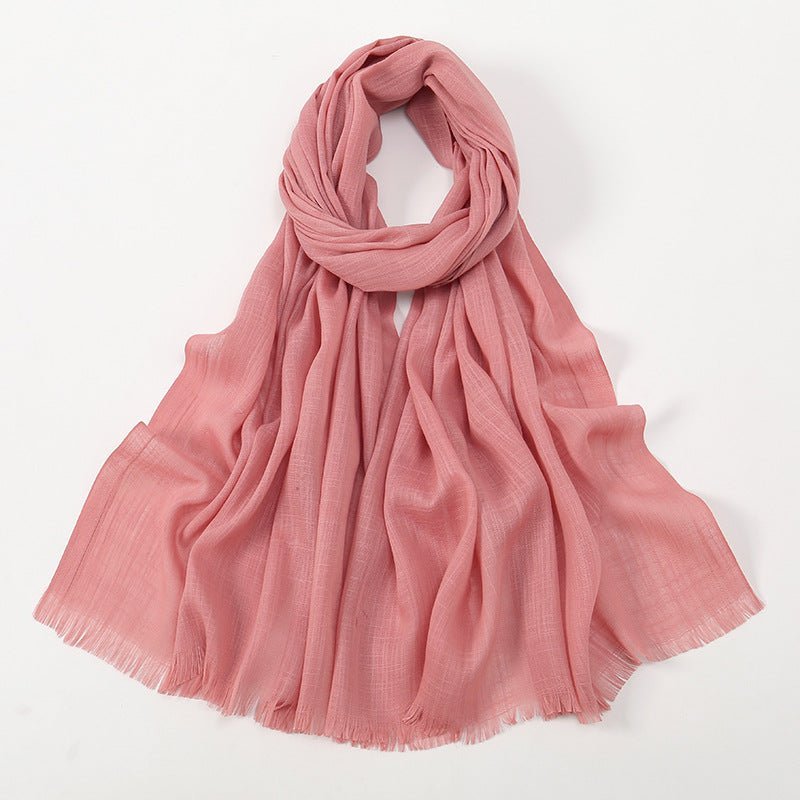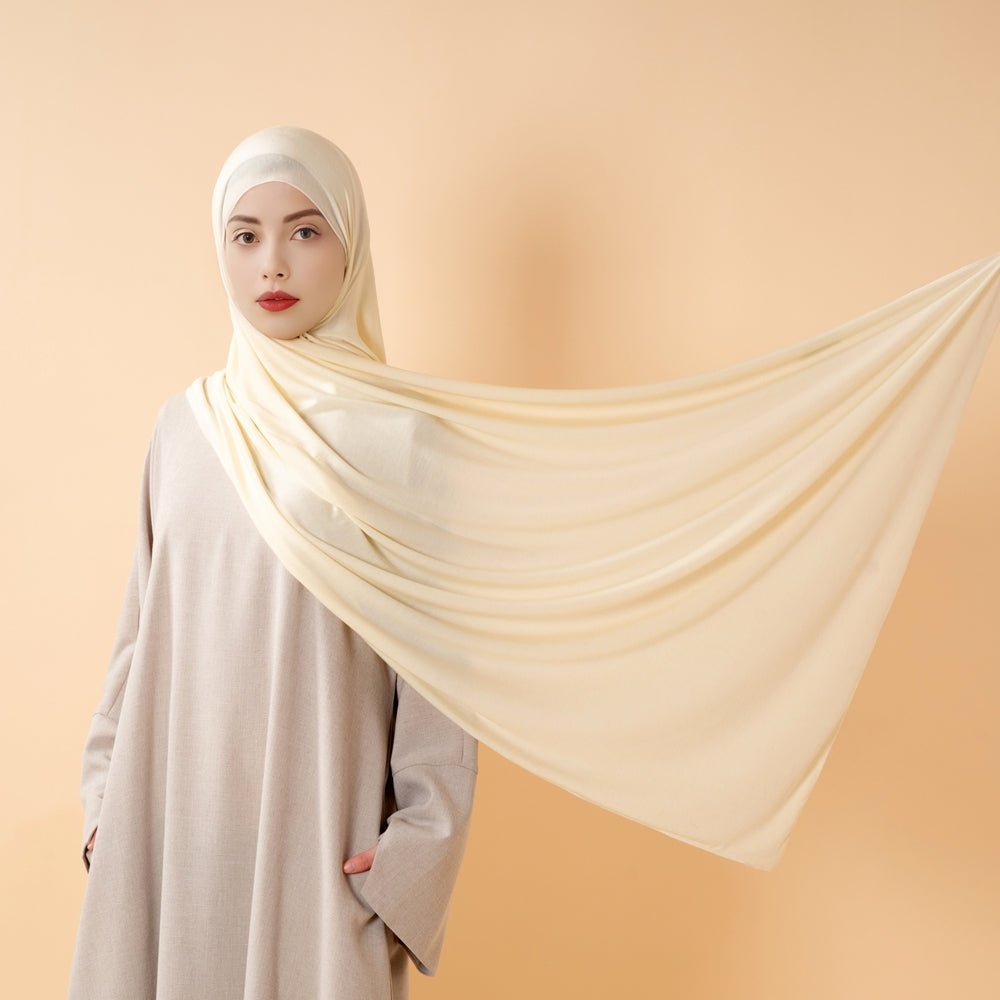

A satin hijab is a lightweight head covering crafted from satin fabric—a smooth, tightly woven textile with a glossy front and matte reverse—that drapes elegantly and reflects light beautifully, making it ideal for both everyday wear and formal occasions. Unlike cotton or jersey hijabs, satin's luxurious finish and fluid movement create a polished, refined appearance whilst remaining comfortable for extended wear.
Why Choose a Satin Hijab?
The appeal of a satin hijab extends far beyond aesthetics. Satin's smooth surface creates minimal friction, which means it holds its shape longer throughout the day and resists the creasing that plagues cotton alternatives. The fabric's natural sheen catches light in a way that feels inherently elegant—whether you're heading to work, a family gathering, or a formal event.
At Mariam's Collection, we've found that customers often choose satin hijabs when they want their modest style to feel intentional and considered, rather than casual. The fabric naturally suggests care and attention to presentation, which resonates with women who view their hijab as part of their overall aesthetic rather than simply a religious obligation.
Satin also tends to sit beautifully against the face and neck without slipping as readily as lighter synthetics, and it's considerably cooler than wool or thick crepe—making it suitable year-round, though particularly welcome during warmer months.

Styling a Satin Hijab for Different Occasions
Satin Hijab for Everyday Wear
For daily wear, a satin hijab in a neutral or subtle print works effortlessly. The Tie-Dye Watercolor Print Satin Hijab Scarf (MH212) offers a contemporary touch without demanding much styling effort—its soft colour gradients complement most skin tones and coordinate with casual abayas or everyday dresses. The fluid drape of satin means you can achieve a polished look with minimal pinning; often a single brooch or hijab pin is sufficient to keep it secure.
Pair a neutral satin hijab with a simple abaya and you've created an outfit that feels intentional without appearing overdressed. The satin's sheen does the work for you, adding visual interest even in monochromatic combinations.
Satin Hijab for Formal Events and Celebrations
For weddings, formal dinners, or celebrations, satin hijabs with embellishment truly shine. The Gold Chain Beaded Edge Crinkle Satin Hijab (MH238) exemplifies this: the delicate beading along the edge catches light and adds a layer of sophistication that feels appropriate for significant occasions. The crinkle texture adds dimension whilst maintaining satin's signature sheen.
When wearing a beaded or embellished satin hijab, let the hijab be the focal point. Pair it with a simpler abaya in a complementary solid colour, and opt for minimal additional jewellery so the hijab's details remain the star. The Satin Silk Printed Hijab Scarf | Printed Satin Hijab Scarf (MH217) offers another formal option—its printed pattern adds visual richness without the weight of beading, perfect for those who prefer understated elegance.
Satin Hijab with Coordinated Sets
For a fully cohesive look, consider pieces designed as matching sets. The Archive Piece Luxury Satin Floaty Kaftan Abaya With Matching Hijab - MP007 (Size M Only) pairs a flowing satin abaya with a coordinating hijab, removing the guesswork from colour and texture matching. Similarly, the Archive Piece Satin Open Abaya & Hijab 2-Piece Set - MP010 (Size M Only) offers a contemporary open-front abaya with a matching hijab, ideal for those seeking a modern, coordinated silhouette.
When you wear a matched set, the satin's consistency across both pieces creates visual harmony that feels intentional and curated.

Fabric Quality and Sheen: What to Look For
Not all satin is created equal. Genuine satin has a tight weave that produces that characteristic lustrous sheen on one side and a duller finish on the reverse. This asymmetry is what gives satin its distinctive light-reflecting properties.
When selecting a satin hijab, run your hand across the fabric. It should feel smooth and slightly cool to the touch, not sticky or plasticky. Quality satin drapes fluidly without bunching; if a hijab feels stiff or papery, the satin content may be blended with heavier fibres or the weave may be loose.
The Silk Marble Print Hijab Scarf (MH209) demonstrates how satin's smooth surface becomes a canvas for intricate printing—the marble effect appears crisp and detailed because the tight weave holds the dye evenly. This is a hallmark of quality satin construction.

Caring for Your Satin Hijab
Washing and Drying a Satin Hijab
Satin requires gentler handling than everyday cotton. Hand washing is always preferable to machine washing, even on a delicate cycle. Use lukewarm water—never hot—and a mild, pH-neutral detergent. Submerge the hijab and gently agitate for a minute or two, then rinse thoroughly under cool running water until all soap residue is gone.
Do not wring a satin hijab. Instead, gently squeeze out excess water whilst supporting the fabric in your hands. Lay it flat on a clean, dry towel to air dry, or hang it loosely over a clothes rail away from direct sunlight or heat sources. Sunlight can fade the dyes over time, and heat can damage the satin's weave.
Storage and Ironing a Satin Hijab
Store your satin hijabs folded loosely in a clean drawer or on a shelf, away from damp environments. Humidity can encourage mildew, particularly if the hijab isn't completely dry before storage. If you need to iron your satin hijab, use the lowest heat setting and place a thin cotton cloth between the iron and the hijab to protect the sheen. Always iron on the reverse (matte) side if possible.
Many satin hijabs, particularly those with a crinkle finish like the Gold Chain Beaded Edge Crinkle Satin Hijab (MH238), don't require ironing at all—the textured weave naturally disguises minor creasing.
Handling Embellished Satin Hijabs
If your satin hijab features beading or embroidery, take extra care during washing. Submerge the hijab gently and allow the soapy water to do the work rather than rubbing the embellished areas. If beads or embroidery are delicate, consider hand washing only the non-embellished sections and spot-cleaning the decorated edge with a damp cloth and mild soap.

Colour and Pattern Selection for Satin Hijabs
Satin's reflective surface means colours appear richer and more saturated than they would in matte fabrics. A deep burgundy or forest green in satin will look noticeably more luxurious than the same shade in cotton. This is one reason why even neutral satin hijabs feel more formal than their cotton counterparts.
Printed satin hijabs, such as the Satin Silk Printed Hijab Scarf | Printed Satin Hijab Scarf (MH217) and Tie-Dye Watercolor Print Satin Hijab Scarf (MH212), showcase how satin's smooth surface allows for crisp, detailed prints. The sheen enhances the visual depth of patterns, making them appear more dimensional than on matte fabrics.
When selecting colours, consider your skin tone and the colours you already own. Satin's sheen means it can appear brighter or deeper depending on the light, so try to view your chosen hijab in natural daylight before committing.

Sizing and Fit for Satin Hijabs
Most satin hijabs are one-size-fits-most, typically measuring around 70 by 180 centimetres. This generous length allows for various wrapping styles—whether you prefer a full wrap with tucking, a loose drape, or a pinned style.
Because satin is fluid and doesn't cling, it works well for all face shapes and head sizes. The key is securing it properly so it doesn't slip. A good hijab pin or magnetic clasp is essential for satin hijabs; the smooth surface can be slippery if left unsecured.
For those seeking coordinated pieces, note that the Archive Piece Luxury Satin Floaty Kaftan Abaya With Matching Hijab - MP007 (Size M Only) and Archive Piece Satin Open Abaya & Hijab 2-Piece Set - MP010 (Size M Only) are available in size M, so check sizing information before purchasing sets.

Satin Hijab Investment Value
A quality satin hijab, properly cared for, will last considerably longer than cheaper alternatives. The tight weave resists pilling and fraying, and the smooth surface doesn't snag easily. This durability, combined with satin's timeless elegance, makes it a worthwhile investment for anyone building a modest wardrobe.
Whether you choose a simple solid satin hijab for everyday wear or a beaded piece for formal occasions, you're investing in a garment that will remain relevant and beautiful for years. The satin hijab transcends seasonal trends because its appeal is rooted in fabric quality and timeless elegance rather than fleeting fashion cycles.
Frequently asked questions
Can I machine wash a satin hijab?
Hand washing is recommended for satin hijabs to preserve the fabric's sheen and prevent damage. If you must use a machine, select the delicate cycle with cold water and place the hijab in a mesh laundry bag, then air dry flat.
Why does my satin hijab slip throughout the day?
Satin's smooth surface can be slippery. Use a quality hijab pin, magnetic clasp, or brooch to secure it properly. Ensure your underscarf or bonnet provides a non-slip base as well.
How do I remove wrinkles from a satin hijab without ironing?
Hang the hijab in a steamy bathroom whilst you shower, or lay it flat on a damp towel and allow it to air dry—the moisture helps release minor creases. For stubborn wrinkles, use a low-heat iron on the reverse side with a protective cloth between the iron and fabric.
What's the difference between satin and silk hijabs?
Satin is a weave structure (tight and glossy on one side, matte on the reverse), whilst silk is a fibre. A satin hijab may be made from polyester, cotton, or silk. Silk satin offers superior breathability and luxury but typically costs more. The Satin Silk Printed Hijab Scarf | Printed Satin Hijab Scarf (MH217) blends these qualities for a refined finish.
Related reading
- Khimar Buying & Styling Guide: Fabric, Fit & Everyday Wear
- Chiffon Hijab Styling Guide: Drape, Fabric & Everyday Wear
- Jersey Hijab: The No-Slip Everyday Wear Guide