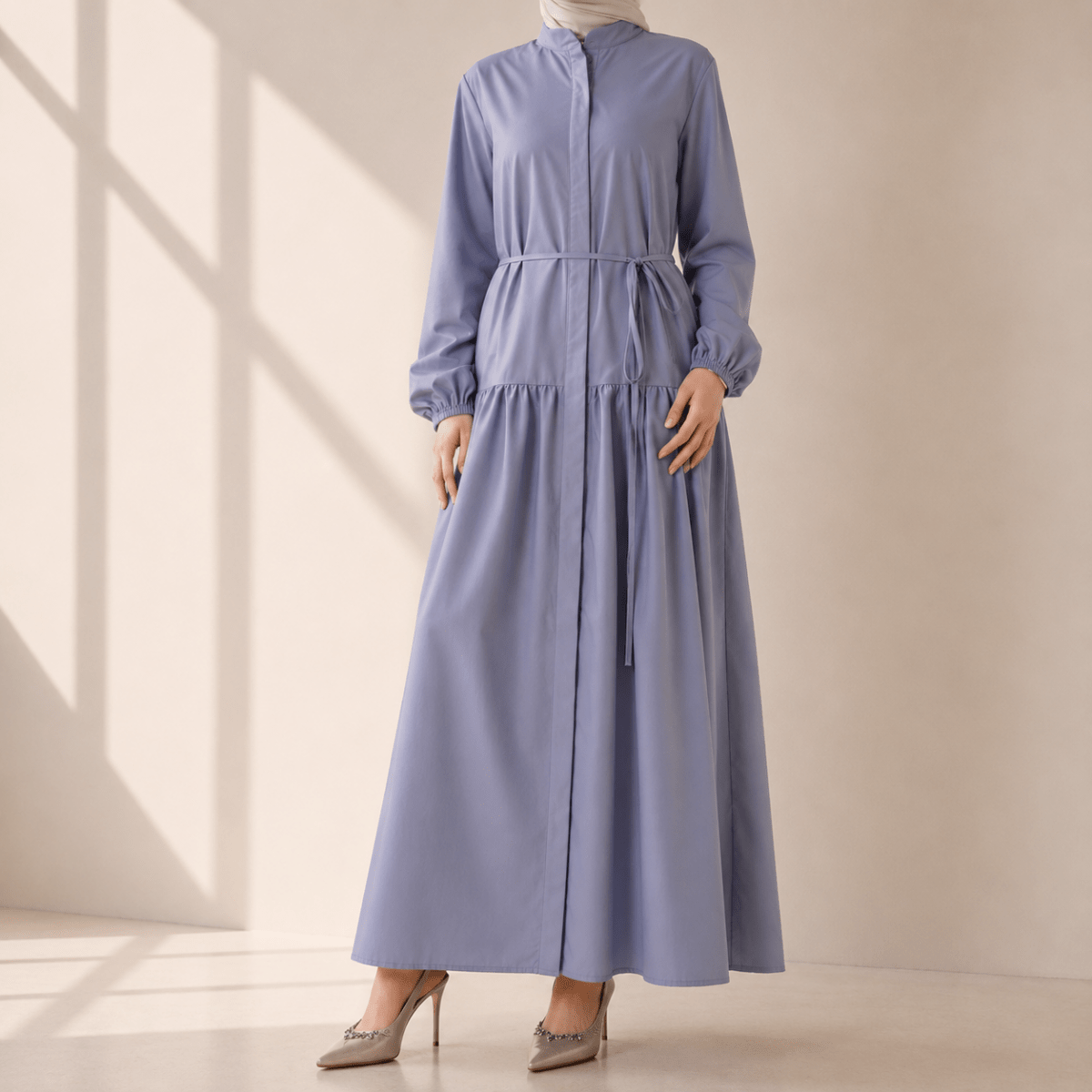

An abaya is a long, flowing outer garment worn by Muslim women, typically extending from the shoulders to the ankles, designed to provide modest coverage whilst allowing freedom of movement and personal style expression through layering, embellishment, and silhouette variation.
Understanding the Abaya: Definition and Core Purpose
The abaya occupies a unique place in modest fashion—it is neither a dress nor a coat in the Western sense, but rather a versatile layer that sits between everyday clothing and outerwear. The word "abaya" comes from the Arabic root meaning "to wrap" or "to cover," and that essence remains central to its design today.
At its most fundamental, an abaya provides full-body coverage from shoulder to ankle. The garment is characterised by its loose, flowing silhouette that drapes generously over the body, avoiding any tight or form-fitting lines. This design principle is rooted in the Islamic concept of modesty, but modern abayas have evolved far beyond simple black fabric—they now feature tailored cuts, rich embroidery, layered textures, and contemporary colour palettes that allow wearers to express their personal style.
The abaya differs from other modest garments like the jilbab or chador in its construction and wearing style. Whilst a jilbab is often worn as a single piece, an abaya is typically layered over everyday clothing, allowing the wearer to create a complete outfit by choosing what sits beneath it. This flexibility is one reason the abaya has become so popular across diverse Muslim communities and cultures worldwide.

Historical Origins and Cultural Significance
Where the Abaya Originated
The abaya has its deepest roots in the Arabian Peninsula, particularly in the Gulf region, where it became an established garment during the early Islamic period. Historically, it was worn as a practical response to both climate and cultural values—the loose, flowing design provided protection from intense heat and sun whilst maintaining the modesty principles central to Islamic teachings.
For centuries, the abaya remained largely consistent in form: a simple, often black, flowing robe worn by women across the Middle East. However, its adoption and adaptation varied significantly by region. In some areas, it became a daily necessity; in others, it was reserved for formal occasions or public outings. This regional variation is important to understand, as it shows that the abaya has never been a monolithic garment but rather one that shifts with culture, climate, and community needs.
Evolution from Traditional to Contemporary Styles
Over the past two decades, the abaya has undergone a dramatic transformation. What was once a predominantly plain, black, unadorned outer layer has become a canvas for fashion creativity. Modern abayas now feature bold embroidery, layered fabrics, asymmetrical hems, structured shoulders, and rich colour options including deep jewel tones, creams, and pastels.
This shift reflects broader changes in how Muslim women approach modest fashion—moving away from the idea that modesty means invisibility, towards the understanding that it means dressing thoughtfully and intentionally. Contemporary designers and brands have recognised that modest fashion can be both deeply traditional and thoroughly modern.

How an Abaya Is Worn Today
Layering and Styling an Abaya for Everyday Wear
One of the most appealing aspects of the modern abaya is its versatility. Unlike a dress, which stands alone, an abaya is designed to be layered. Most women wear an abaya over their regular clothing—a pair of trousers, a midi skirt, a long-sleeved top, or a dress. This means a single abaya can create dozens of different looks depending on what you wear beneath it.
For everyday wear, many women opt for simpler abayas in neutral colours that can transition easily from work to social occasions. At Mariam's Collection, we've found that customers often choose versatile pieces like the 2-Piece Polka Dot Print Open Abaya Set(MOA316), which offers a contemporary twist on the traditional silhouette whilst remaining practical for daily life.
The key to styling an abaya for everyday wear is balance. If your abaya is heavily embroidered or patterned, keep the layers beneath it relatively simple. Conversely, if you're wearing a plain, flowing abaya, you can introduce colour, print, or texture through your underlayers. This layering approach gives you control over how much or how little visual interest you want on any given day.
Abaya Silhouettes and Construction Details
Modern abayas come in several distinct silhouettes, each offering different styling possibilities and occasions. Understanding these variations helps you choose pieces that align with your lifestyle and aesthetic preferences.
Open abayas are designed to be worn unbuttoned or unfastened, creating an elegant frame around your outfit. These work beautifully for both casual and formal settings and offer maximum flexibility in layering. The 2-Piece Polka Dot Print Open Abaya Set(MOA316) exemplifies this style, with its print detail adding visual interest whilst the open construction keeps the silhouette light and modern.
Structured abayas with defined shoulders, tailored waists, or fitted sleeves offer a more fashion-forward approach to modest wear. Pieces like the 2-Piece Embroidered Peplum Jacket & Micro Pleat Maxi Skirt Set(MS417) blur the line between traditional abaya and contemporary fashion, featuring a peplum detail that adds dimension and movement.
Layered and textured abayas incorporate multiple fabrics, pleats, or three-dimensional embellishments. The 2-Piece Pearl Beaded 3D Rose Embroidered Jacket & Chiffon Pleated Maxi Dress Set(MS401) represents this category, combining structured tailoring with delicate embroidery and chiffon layers for a sophisticated, occasion-appropriate look.
Abaya for Different Occasions
The abaya's versatility extends across the full spectrum of occasions. For formal events—whether weddings, celebrations, or professional functions—many women choose abayas with rich embroidery, luxe fabrics, and refined details. The 2-Piece Pearl Beaded 3D Rose Embroidered Jacket & Chiffon Pleated Maxi Dress Set(MS401) is designed with such occasions in mind, offering the elegance and visual impact expected at significant events.
For professional or workplace settings, tailored abayas with clean lines and minimal embellishment are ideal. The 2-Piece Mandarin Collar Longline Shirt & Wide Leg Pants Set(MS418) offers a contemporary, structured approach that works well in corporate or formal environments, with its mandarin collar detail adding subtle sophistication.
For casual, everyday occasions, relaxed abayas or abaya sets that prioritise comfort and practicality are most suitable. The 2-Piece Hoodie Top & Full A-Line Maxi Skirt Set(MS427) combines comfort with style, offering a modern take on modest layering that feels at home in everyday contexts.
Fabric Choices and Seasonal Considerations
The fabric of an abaya significantly impacts both its appearance and its suitability for different seasons and occasions. Traditional abayas were often made from heavy black silk or cotton, designed to last and maintain their shape. Modern abayas use a much wider range of materials.
Lightweight fabrics like chiffon, crinkle silk, and flowing cotton blends are ideal for warmer months and everyday wear, allowing air circulation and movement. The 2-Piece Ice Silk Crinkle Hi-Lo Top & Wide Leg Pants Set(MS421) features ice silk, a breathable, temperature-regulating fabric that works well in transitional seasons and warm climates whilst maintaining a sophisticated drape.
Heavier fabrics like structured cotton, linen blends, and embellished materials work well for formal occasions and cooler seasons. The weight of the fabric affects how the abaya moves and hangs, so choosing the right weight for your climate and intended use is essential.

The Modern Abaya in Global Context
Today, the abaya is worn by Muslim women across the world—not just in the Middle East, but in Europe, North America, Asia, and beyond. Each region has adapted the garment to suit local climates, fashion sensibilities, and cultural contexts. In some communities, the abaya remains a daily essential; in others, it is reserved for special occasions or religious observances. In many places, it exists alongside other modest fashion choices as one option among many.
What unites all these variations is the core principle: the abaya is a garment that allows Muslim women to dress modestly, respectfully, and with intention, whilst maintaining full agency over their appearance and personal style. It is neither a constraint nor a statement of oppression, but rather a tool for expressing both cultural identity and contemporary fashion sense.

Choosing and Caring for Your Abaya
Sizing and Fit Guidance for Abayas
Because abayas are designed to be loose and flowing, sizing is often more forgiving than in fitted garments. However, proper fit still matters. An abaya should drape smoothly from your shoulders without bunching at the neckline, and the length should reach your ankles without dragging excessively on the ground. The sleeves should extend to your wrists or slightly past them, depending on the style.
When shopping for an abaya set—such as the 2-Piece Hoodie Top & Full A-Line Maxi Skirt Set(MS427) or the 2-Piece Mandarin Collar Longline Shirt & Wide Leg Pants Set(MS418)—pay attention to the proportions of each piece. If you're petite, an oversized silhouette may overwhelm your frame; if you're taller, you may need longer lengths to maintain proper coverage.
Fabric Care and Maintenance
Proper care extends the life of your abaya and keeps it looking beautiful. Most abayas benefit from gentle hand-washing or a delicate machine cycle in cool water. Embellished pieces, like the 2-Piece Pearl Beaded 3D Rose Embroidered Jacket & Chiffon Pleated Maxi Dress Set(MS401), should be hand-washed to protect beading and delicate stitching.
Air-drying is preferable to machine-drying, which can damage fabric and embellishments. If ironing is needed, use a low heat setting and avoid direct contact with embroidery or beading. Store abayas on hangers or folded carefully to preserve their shape and prevent wrinkles.

Conclusion: The Abaya as Personal Expression
An abaya is far more than a religious requirement or cultural obligation—it is a garment that has evolved into a genuine fashion statement. From its origins as a practical, climate-appropriate layer in the Arabian Peninsula to its current incarnation as a diverse, creative, and deeply personal choice, the abaya reflects how Muslim women navigate the intersection of tradition, modesty, and contemporary style.
Whether you choose a simple, elegant open abaya like the 2-Piece Polka Dot Print Open Abaya Set(MOA316), a structured, fashion-forward piece like the 2-Piece Embroidered Peplum Jacket & Micro Pleat Maxi Skirt Set(MS417), or a luxurious, occasion-appropriate set like the 2-Piece Pearl Beaded 3D Rose Embroidered Jacket & Chiffon Pleated Maxi Dress Set(MS401), your abaya is an extension of your identity. Understanding what an abaya is—its history, its purpose, and its modern applications—helps you wear it with confidence and intention, creating a wardrobe that honours both your values and your personal aesthetic.

Frequently asked questions
Is an abaya the same as a jilbab or chador?
No, they are distinct garments. An abaya is typically worn as an open layer over everyday clothing, whilst a jilbab is usually a single, fitted piece. A chador is a semicircular fabric draped and held in place by hand. Each has different construction, wearing methods, and regional significance.
Can I wear an abaya in Western countries?
Absolutely. Abayas are worn by Muslim women globally, including in Europe and North America. Many contemporary abayas are designed with modern aesthetics in mind, blending traditional modesty with contemporary fashion sensibilities.
What colours are appropriate for an abaya?
Whilst black remains traditional and popular, modern abayas come in a full spectrum of colours—from jewel tones and pastels to creams and earth tones. The choice depends on your personal preference, occasion, and cultural context.
How do I style an abaya for a formal event?
Choose an abaya with rich embroidery, luxe fabrics, and refined details. Layer it over an elegant dress or coordinated outfit, and pair it with formal accessories. Structured, embellished pieces like the 2-Piece Pearl Beaded 3D Rose Embroidered Jacket & Chiffon Pleated Maxi Dress Set(MS401) work particularly well for formal occasions.
Related reading
- Graduation Abaya: Elegant Ceremony Dressing for Muslim Women
- How to Wear an Open Abaya: Styling Guide for Modern Modesty
- Butterfly Abaya Styling Guide: Elegant Looks for Every Occasion