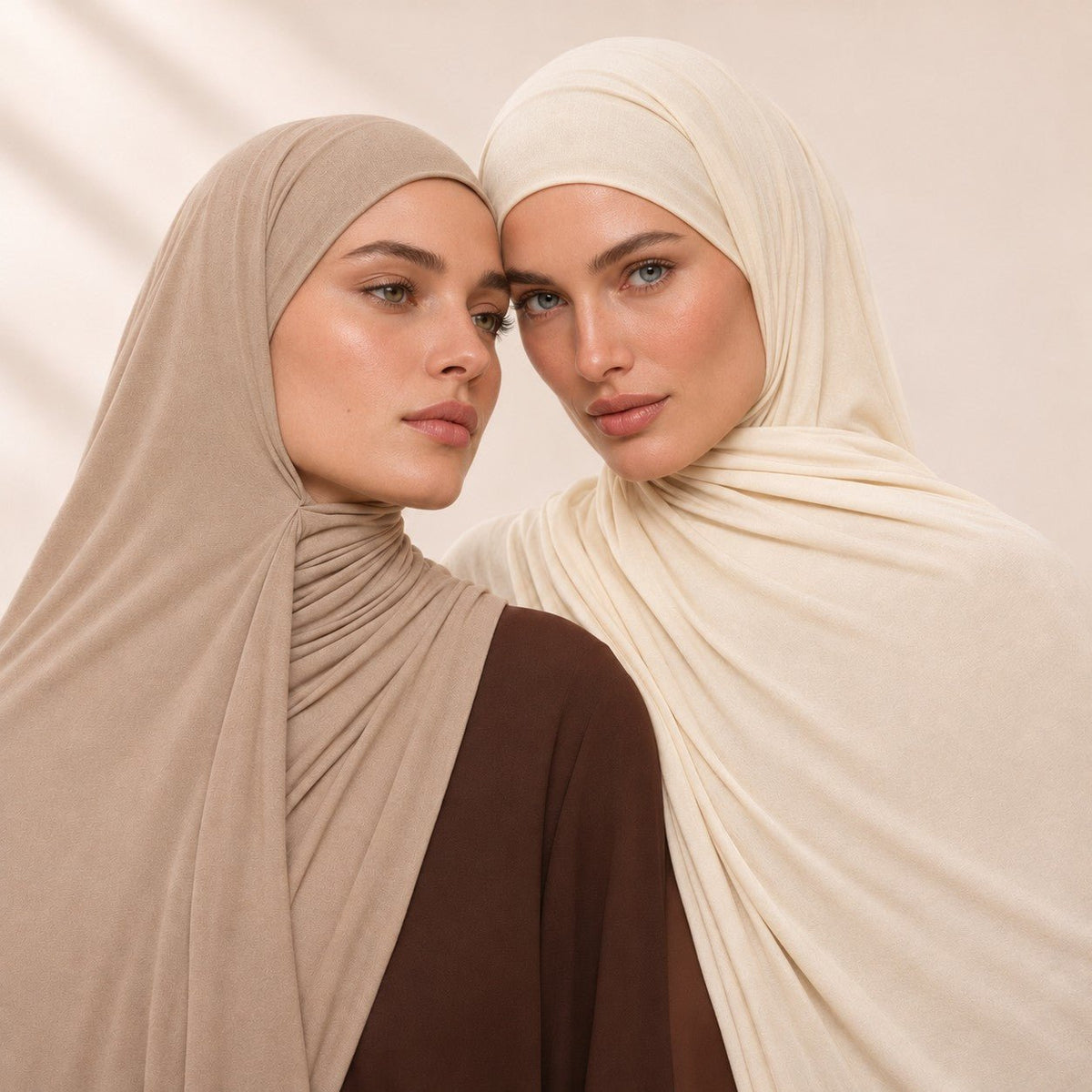

An abaya is a long, flowing open-front robe worn over everyday clothing, typically featuring a loose, A-line or straight silhouette that drapes from the shoulders to the ankles, designed for modest layering rather than as a standalone dress. A jilbab, by contrast, is a one-piece garment that functions as a complete dress or outer layer, often with a more structured fit through the torso and a gathered or pleated skirt, worn without additional layers underneath.
Understanding the Abaya: Structure and Purpose
The abaya is fundamentally an open-front outer garment. It sits over your existing clothing—whether that is a dress, tunic, trousers, or casual wear—and serves as a layer of modesty and elegance. The defining feature is its open construction; it fastens with buttons or clasps down the front, allowing you to show what lies beneath whilst maintaining full coverage.
Abayas come in various silhouettes. The most common is the A-line cut, which gently widens from the shoulders, creating a flattering drape that suits most body types. Straight-cut abayas fall directly from shoulder to hem with minimal shaping, offering a more minimalist aesthetic. Some abayas feature subtle gathering at the sides or back, adding gentle movement without bulk.
At Mariam's Collection, we recognise that many customers choose abayas specifically for their versatility—you can wear the same abaya over different outfits, making it a practical investment. The Cocoon-Cut Crepe Abaya Perfect For Umrah With One-Piece Hijab Attached (MA143) exemplifies this practicality, combining a softly structured silhouette with an integrated hijab, ideal for travel or occasions where coordinated simplicity matters.

Understanding the Jilbab: A Complete Garment
The jilbab functions differently. It is a one-piece dress designed to be worn on its own, without layering over other clothing. This distinction matters for both fit and styling. Because the jilbab is self-contained, it typically has a defined waistline, structured bodice, and a skirt section—whether gathered, pleated, or A-line—that creates its own silhouette.
Jilbabs are often more tailored than abayas, though still modest and loose-fitting. They may feature hoods, as seen in the Solid Stylish Jilbab With A Hood | Crepe Jilbab With Attached Hood (MJ015), or niqab attachments, like the MJ0055 Viscose Niqab Attached 1-Piece Jilbab, which integrates face-covering functionality into a single garment. The Nida 2-Piece Jilbab Set — Prayer Set, Kids & Adult Sizes (MJ008) demonstrates how jilbabs can also be offered as coordinated sets, with a matching hijab or prayer garment included.
Jilbab Silhouettes and Styling
Jilbabs typically fall into two main categories: the gathered or pleated style, which creates volume in the skirt and a more relaxed appearance, and the A-line cut, which tapers slightly at the hem for a streamlined look. Some modern jilbabs incorporate subtle shaping or panels to define the waist without compromising modesty.
Because a jilbab is worn alone, its internal construction matters more than an abaya's. You are not layering it over a dress or tunic, so the fabric weight, lining, and cut must work together to create a flattering, comfortable silhouette on its own.

Fabric Choices: Abaya vs Jilbab Considerations
Both abayas and jilbabs are available in a range of fabrics, but the choice often depends on the garment's intended use and your climate.
Abaya Fabrics
Abayas are commonly made from crepe, a textured fabric with subtle elasticity that drapes beautifully and resists creasing. Nida, a soft jersey-like material, is another popular choice for abayas because it is breathable and comfortable for everyday wear. Some abayas use silk-blend fabrics for special occasions, or linen for summer layering.
Because an abaya layers over other garments, lighter fabrics work well—you are not relying on the abaya alone for structure or warmth. The Premium One-Piece Hijab Abaya for Women | Nida Fabric Travel Abaya (MJ024) uses nida specifically because its lightweight, breathable nature suits both travel and everyday layering.
Jilbab Fabrics
Jilbabs often benefit from slightly heavier or more structured fabrics because they must hold their shape independently. Crepe is equally popular for jilbabs as it is for abayas, offering weight and drape. Viscose blends provide a fluid, elegant drape with more body than pure cotton. Nida works for jilbabs too, though a slightly heavier nida weight is often chosen to ensure the garment maintains its silhouette throughout the day.

Occasions: When to Wear Each Garment
Abayas for Everyday and Layered Looks
Abayas excel for everyday wear, work, shopping, and casual outings. Because you can layer them over different pieces, they work for varying dress codes and personal style preferences. If you want to wear trousers and a tunic one day and a dress the next, the same abaya works beautifully over both. They are also ideal for travel, particularly umrah or hajj, where you want a single elegant layer that coordinates with everything. The Cocoon-Cut Crepe Abaya Perfect For Umrah With One-Piece Hijab Attached (MA143) is specifically designed with travel in mind, combining ease and elegance for sacred journeys.
Abayas also work well for formal occasions when paired with the right undergarments—a structured dress or tailored trousers and a coordinating top can create a sophisticated, polished look under an abaya.
Jilbabs for Prayer, Formal Wear, and Defined Occasions
Jilbabs are often chosen for prayer because they are self-contained and do not require coordination with undergarments. Many women keep a dedicated prayer jilbab for convenience and spiritual focus. The Nida 2-Piece Jilbab Set — Prayer Set, Kids & Adult Sizes (MJ008) is explicitly designed as a prayer set, offering a complete, coordinated option for salah.
Jilbabs also work beautifully for formal occasions—weddings, formal dinners, or religious gatherings—where a single, intentional garment feels appropriate. Because the jilbab is complete in itself, there is no question of coordination or layering; you put it on and you are ready. The MJ0055 Viscose Niqab Attached 1-Piece Jilbab and the Solid Stylish Jilbab With A Hood | Crepe Jilbab With Attached Hood (MJ015) both demonstrate how jilbabs can be designed for specific purposes—face-covering modesty or weather protection—whilst remaining elegant and self-sufficient.

Fit, Sizing, and Body Considerations
Abaya Fit and Sizing
Because abayas are layering pieces, sizing is often more forgiving. You choose your abaya size based on your height and the level of looseness you prefer, without worrying about what lies beneath. Most women find that a single abaya size works across multiple body types and outfit combinations. Length is the primary consideration—an abaya should skim the top of your foot without dragging.
If you are petite, look for abayas cut for shorter heights to avoid excess fabric at the hem. If you are taller, ensure the abaya is long enough to provide full ankle coverage. The open-front design means fit is inherently flexible; the abaya simply drapes over whatever you are wearing.
Jilbab Fit and Sizing
Jilbabs require more precise sizing because they are worn alone. You need to consider your height, shoulder width, and how you prefer the garment to fall. A jilbab that is too large will look shapeless; one that is too small will restrict movement or gape at the front.
Most jilbabs are sized by height or by a combination of height and width. If you have a fuller figure, you may prefer a jilbab with gathering or pleating in the skirt, which accommodates curves whilst maintaining modesty. If you prefer a more streamlined look, an A-line jilbab might suit you better. The Printed One-Piece Hijab Abaya Prayer Set (MJ025) and the Premium One-Piece Hijab Abaya for Women | Nida Fabric Travel Abaya (MJ024) both come in multiple sizes to accommodate different body types and height ranges.

Care and Maintenance
Caring for Your Abaya
Abayas in crepe or nida are generally low-maintenance. Most can be hand-washed in cool water with mild detergent or machine-washed on a gentle cycle. Hang to dry to preserve the drape and avoid shrinkage. Crepe abayas rarely need ironing because the fabric's texture masks minor wrinkles; nida may benefit from a light steam if you prefer a crisper appearance.
If your abaya has embroidery, beading, or an attached hijab (like the Cocoon-Cut Crepe Abaya Perfect For Umrah With One-Piece Hijab Attached (MA143)), check care instructions carefully. Attached hijabs may require gentle hand-washing to protect the seams and fabric integrity.
Caring for Your Jilbab
Jilbabs follow similar care principles, but pay extra attention to the garment's structure. If your jilbab has gathering, pleating, or a hood, ensure you dry it in a way that preserves these details. Lay it flat or hang it carefully rather than wringing it out. If the jilbab has a niqab attachment, as with the MJ0055 Viscose Niqab Attached 1-Piece Jilbab, handle the attachment gently during washing to avoid weakening the stitching.
Viscose-blend jilbabs may require slightly cooler water and gentler handling than pure cotton or nida. Always check the care label specific to your garment's fabric composition.

Making Your Choice: Abaya or Jilbab?
Your choice between an abaya and a jilbab ultimately depends on your lifestyle, personal style, and how you want to use the garment.
Choose an abaya if you want versatility and the ability to layer over different outfits, if you prefer to build your own coordinated looks, or if you need a garment that works for both casual and semi-formal occasions. Abayas are ideal for those who like to express personal style through their undergarments and accessories whilst maintaining full modesty.
Choose a jilbab if you want a complete, self-contained garment that requires no additional coordination, if you need something specifically for prayer, or if you prefer the ease of putting on a single piece that is ready to wear. Jilbabs are excellent for those who value simplicity, spiritual focus, or a more structured silhouette.
Many women find that both abayas and jilbabs have a place in their wardrobe. An abaya works for everyday layering and varied occasions, whilst a jilbab serves prayer, formal events, or days when you want effortless simplicity. The Nida 2-Piece Jilbab Set — Prayer Set, Kids & Adult Sizes (MJ008) and the Printed One-Piece Hijab Abaya Prayer Set (MJ025) are both designed to serve these distinct needs within a single, thoughtful garment.
Whether you choose an abaya, a jilbab, or both, the most important factor is that you feel comfortable, confident, and aligned with your values of modesty and personal expression. The differences between these garments are real and meaningful, and understanding them ensures you invest in pieces that genuinely work for your life.
Frequently asked questions
What is the main difference between an abaya and a jilbab?
An abaya is an open-front layering robe worn over existing clothing, whilst a jilbab is a one-piece dress worn on its own without layers underneath. Abayas offer versatility for layering different outfits; jilbabs provide a complete, self-contained garment.
Can I wear a jilbab for everyday wear?
Yes, absolutely. Many women wear jilbabs daily for their simplicity and elegance. However, abayas are often preferred for everyday layering because they allow you to vary your outfits underneath with a single abaya.
Which is better for prayer?
Jilbabs are traditionally chosen for prayer because they are self-contained and require no coordination. Many jilbabs, including the Nida 2-Piece Jilbab Set — Prayer Set, Kids & Adult Sizes (MJ008), are specifically designed as prayer sets for this reason.
Do I need to size a jilbab differently than an abaya?
Yes. Abayas are forgiving because they layer over other clothing, but jilbabs require more precise sizing since they are worn alone. Ensure your jilbab fits your height and shoulder width properly to maintain a flattering silhouette.
Can an abaya have an attached hijab?
Yes. Many abayas, such as the Cocoon-Cut Crepe Abaya Perfect For Umrah With One-Piece Hijab Attached (MA143) and the Premium One-Piece Hijab Abaya for Women | Nida Fabric Travel Abaya (MJ024), feature integrated hijabs for convenience and coordinated simplicity.
What fabric is best for travel abayas?
Nida is an excellent choice for travel abayas because it is lightweight, breathable, and resists creasing. The Premium One-Piece Hijab Abaya for Women | Nida Fabric Travel Abaya (MJ024) uses nida specifically for these travel-friendly qualities.
Related reading
- The Everyday Jilbab Guide: Styling, Fit & Care for Modest Fashion
- Two-Piece Jilbab: Comfort and Style for Everyday Modest Wear